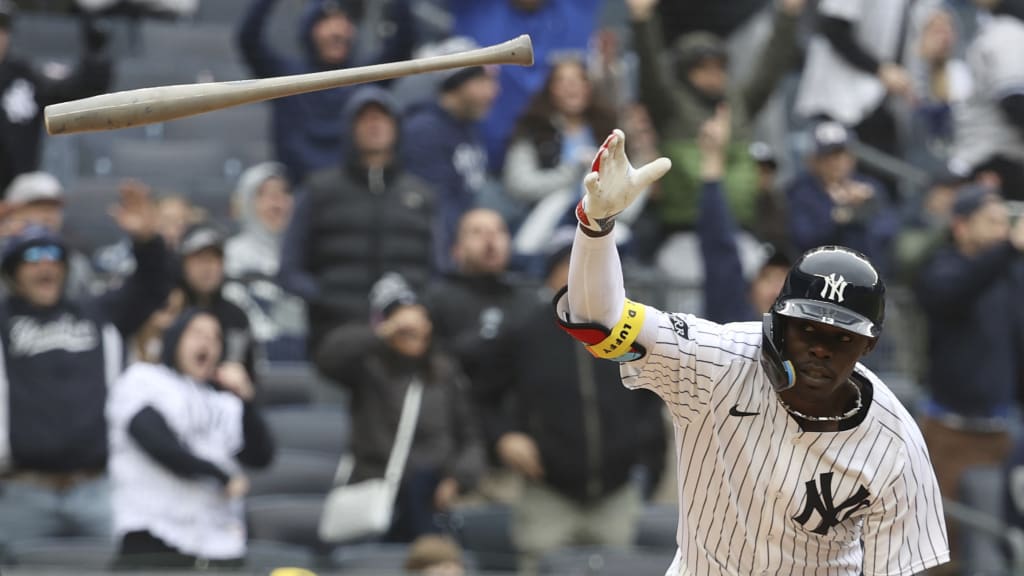
Torpedo Bats: Innovation or Cheating? A History of Baseball’s Ever-Evolving Equipment
Original Article on X Found Here: https://x.com/GroundwalkerL/status/1906789808510575022
Today’s article is a fun one because we’re talking about one of the few acceptable forms of political hatred. Sports. American Politics, and World Politics in general, can break up Families, States, Relationships, etc. They can, and have ruined lives. Sports however, most people are able to hate eachother – but then they can still get a beer afterwards. So here we go talking about the Yankees, everyones favourite team to hate 🙂
Hello Chat, we’re going to write another article today and It’s going to be about a fun topic (as opposed to some of the ones in this project that have been rather political) it’s going to be about the “torpedo bats” that the Yankees have been using in 2025. I transcribed over 6 videos about these bats, including opinions from people all around the league and various sports commenters. Additionally I included a video from MLBs YouTube channel themselves where they go in depth about how to make custom designed bats. Additionally I included a video about the physics of baseball and how choking up on the bat affects hitting. So what I’d like to know is the history of changing bats in baseball, because the handle of the bat has been changed multiple times. Jeff McNeil on the Mets has a back with no handle on the bottom of his. Brice Turang on the Milwaukee Brewers uses a bat with a puck knob handle. Additionally there are bats with an angled handle “the axe bat” which “The Axe bat’s ergonomic shape evenly distributes pressure across the palm, reducing the risk of fatigue and injury” according https://www.justbats.com/blog/post/everything-you-need-to-know-about-axe-bats/ It only seems that now that The New York Yankees, an extremely popular baseball team is hitting homeruns and standing out with the bat, is making changes – that everyone else is calling it cheating and saying that they’re ruining the game. What is your opinion on all of this Torpedo Bat situation?
The history of baseball bats has consistently involved innovation and controversy. From the early days of baseball, bats evolved significantly. Initially, there were few regulations, and players experimented freely with length, weight, and even shape. Over time, Major League Baseball (MLB) standardized regulations regarding bat size, composition, and dimensions.
Evolution of Baseball Bats:
- Early Innovations (19th & early 20th century): Players freely experimented, leading to various bat designs until rules standardized size and weight.
- Standardization (20th century): MLB implemented precise rules—such as maximum diameter and length—to maintain competitive balance.
- Material Innovations: The shift from hickory to ash, and later to maple, altered the bat’s performance characteristics.
- Design Innovations:
- Knobless Bats: Jeff McNeil (Mets) is known for using bats without traditional knobs for comfort and handling.
- Puck Knob Handle: Brice Turang (Brewers) uses bats with a puck knob to improve grip and control.
- Axe Handle: The Axe Bat features an ergonomic angled handle that evenly distributes pressure, reportedly reducing fatigue and injury risks.
The Yankees’ Torpedo Bat (2025):
The Yankees introduced a significant innovation in 2025, employing bats dubbed “torpedo bats.” These bats relocate wood mass closer to the handle, effectively shifting the “sweet spot” downward. This design, backed by an MIT physicist, optimizes contact in areas frequently hit by players who get jammed, turning weak contact into stronger hitsYankees Torpedo Bats.
Key points about the Torpedo Bat:
- Legal under current MLB specifications (within diameter, length, and material rules).
- Redistributes bat weight to enhance contact where players typically hit, enhancing barrel rates.
- Boosts offensive output; Yankees notably hit 15 home runs in just three games using these bats.
- Generates controversy, with critics and fans suggesting an unfair advantage or calling it “cheating.”
Community Reactions:
- Criticism and Skepticism: Fans and analysts quickly labeled it as “cheating,” especially due to the Yankees’ immediate offensive surgeYankees Torpedo Bats.
- Defense and Praise: Others view the innovation positively, arguing the Yankees are merely taking advantage of permitted parameters, similarly to past equipment innovations like the introduction of Axe bats. They assert this change revitalizes baseball by increasing excitement and offensive production.
Historical Context and Comparison:
- Previous controversies and innovations, such as corked bats, pine tar incidents, and “Spider Tack” for pitchers, triggered regulatory adjustments.
- The torpedo bat parallels past innovations like golf club customizations, designed to optimize equipment performance for individual players based on their swing analyticsYankees Torpedo Bats.
My Opinion on the Torpedo Bat:
This innovation is fascinating and beneficial for baseball, provided it remains within MLB guidelines. Historically, equipment evolution drives sports forward, enhancing athletic performance and fan engagement. The Torpedo bat’s concept—tailoring equipment precisely to the player’s unique hitting tendencies—reflects broader trends in sports technology and analytics. It makes baseball more exciting without altering fundamental fairness or integrity.
The current controversy largely arises from perceptions around tradition and the Yankees’ prominence. If a less prominent team like the Royals had used these bats without immediate explosive results, the outcry would likely be minimalYankees Torpedo Bats.
Future Outlook:
This innovation might lead MLB to revisit its regulations if offensive output drastically shifts. However, embracing technology and personalized equipment seems inevitable in baseball’s future. Expect other teams to rapidly adopt similar approaches, leading to a more analytical and personalized baseball era.
Ultimately, the torpedo bat embodies baseball’s ongoing evolution, balancing tradition with innovation, and underscores how small technological advancements can significantly alter the dynamics of the game.
Can you now talk about the Physics of changing the center of gravity on the bat, how that relates to choking up on the bat, and how that could be considered cheating. Okay lets say that the bat itself falls within the rules, okay. However that small change has game-redefining physic implications. Corked bats are illegal because youre able to swing the bat faster. If torpedo bats allow you to swing the bat faster is that not the same thing? do you think theyll be made illegal?
Physics of Changing the Center of Gravity in Baseball Bats
When the Yankees introduced the “torpedo bat,” the fundamental change was shifting the bat’s mass closer to the handle. In physics terms, this is changing the center of gravity (COG)—the point where the weight of the bat is balanced. By moving the center of gravity closer to the batter’s hands, the bat’s swing weight (or moment of inertia) decreases. This change makes the bat feel lighter and easier to swing, enabling batters to generate greater bat speed, improve control, and react more quickly to pitches.
How This Relates to Choking Up on a Bat
The idea behind choking up—moving one’s hands further up the handle—is also about altering the effective center of gravity. Choking up shortens the effective length of the bat, similarly decreasing its moment of inertia. This allows batters greater control, faster swing speeds, and quicker reactions, especially on inside pitches or when facing fast pitching.
According to research like that done by Baseball Bat Bros, choking up significantly impacts swing mechanics by increasing bat control, even though maximum exit velocity might slightly decrease. Essentially, the torpedo bat achieves a similar benefit as choking up but without requiring the batter to adjust hand placement.
Could This Be Considered Cheating?
Here’s where the line between innovation and cheating can become blurry. A critical precedent exists in baseball: corked bats. These bats are illegal because hollowing and filling them with lighter materials (such as cork) shifts the bat’s center of gravity closer to the handle, dramatically reducing swing weight and increasing swing speed. This offers an unfair advantage and is explicitly banned.
If the torpedo bat, like corked bats, enables increased swing speed due to altered mass distribution, critics argue that it’s effectively exploiting the same physical advantage—but within the bounds of current MLB rules. The ethical dilemma is clear: Is altering mass distribution within existing bat standards truly different from using banned materials like cork?
The Logical Fallacy and the Rulebook
The logical fallacy here lies in assuming that just because a bat allows for faster swings, it must automatically be illegal or unethical. MLB explicitly defines rules based on dimensions, weight, and materials—but not explicitly on mass distribution within those defined constraints. The torpedo bat currently fits within existing MLB rules, thus it isn’t “cheating” by strict definition. However, this doesn’t remove the controversy. The crux is whether MLB should regulate not just dimensions and materials, but also how weight is distributed.
Will Torpedo Bats Become Illegal?
Given baseball’s historical response to equipment controversies, there’s a real possibility the torpedo bat could face regulatory scrutiny. MLB often amends rules following widespread attention or significant impact on gameplay. Examples include bans on corked bats, pine tar usage beyond regulated amounts, and “Spider Tack” for pitchers.
The torpedo bat’s situation echoes past equipment controversies. It fundamentally shifts gameplay by significantly impacting swing speed and reaction time. While it doesn’t violate existing specifications, MLB might re-examine their bat regulations. They could introduce new stipulations explicitly governing weight distribution to protect the balance between pitching and hitting, maintaining the game’s integrity and fairness.
Conclusion: Innovation vs. Integrity
Though torpedo bats are currently legal, the critical question becomes: Should they remain so? MLB’s response will likely hinge on how dramatically this innovation affects game balance and public perception. If these bats drastically elevate offensive statistics league-wide, expect regulations to emerge explicitly limiting bat design or weight distribution methods.
Innovation inevitably pushes boundaries, challenging regulators to balance fairness with technological advancement. The torpedo bat debate ultimately underscores baseball’s enduring struggle: preserving tradition and integrity while embracing beneficial innovation.
Thanks for reading this far, I hope you found it interesting. LETS GO YANKEES!
- 1. Request Service(s)
- 2. About Me
- 3. Writing Articles with ChatGPT Home Page
- 4. Groundwalker Health & Wellness
- 5. Groundwalker Merch
- Finances: 2025 Recession Theory
- Finances: Matt Khors & The 2024 PRecession
- Groundwalker Content Links
- Groundwalker Fitness
- Guideline(s): Luke’s Declassified College Survival Guide
- Guideline(s): Online Content Creation
- Guideline(s): Personal Moral & Ethical Foundations
- Luke Groundwalker & Groundwalker Designs
- Personal Philosophy: Finance
- Resources: Experience Catalogue
- Resources: Professional Resume
- Technique: Animal Style Skiing
- Technique: Daily Mindfulness
- Welcome to the Home of all Things Luke
- WLGW 89.7FM Groundwalker Radio
- WLGW897FM: The Grey Jedi Documentary Script
- WLGW897FM: The Groundwalking Way: A Path to Balance and Authenticity
- WLGW98.7FM: Groundwalker Philosophy: A Life of Growth, Creativity, and Community
 Luke "Groundwalker" Jaeger