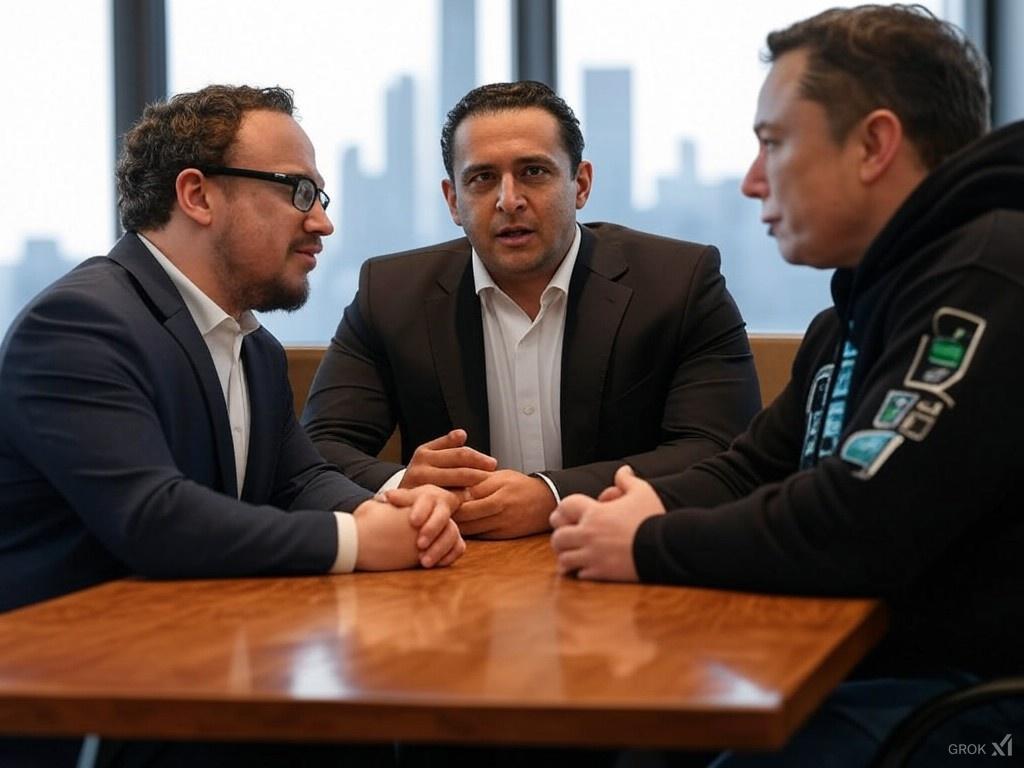
A response to Sam Hyde’s Dear Elon Video
ORIGINAL ARTICLE HERE: https://x.com/compose/articles/edit/1854930861965119488
Here is the Full Unedited Discussion with ChatGPT and it’s analysis of the “MAGA Civil War” as CNN described it.
Hello Chat, Tonight we are going to be reviewing a video by Sam Hyde called Dear Elon. Currently Elon Musk and Vivek Ramaswamy have come under fire for being “america first” and yet are ready to undercut high paying american jobs for indian’s on work visa. CNN has been calling it a MAGA civil war and have been playing it up in the current news cycle. thats why I included the CNN transcript in the attached file.
Sam Hyde is an edgy comedian who you can look up and whose transcripts I have included in the attachment. He’s what I would call an edgelord and he considers himself next in line to be on mainstream media tv (adult swim tim and eric show). Despite all of his crazyness, he does hit on some truths in the world – or at least some truths that I agree with.
Sam Hyde makes a plea to elon musk to reconsider what he’s been talking about when he talks about the American people. He makes many jokes and I’m not sure how they’ll translate into this, so if you dont understand some stuff I get that. There are many things that he says that are also small parts of a larger picture. He’s an ironic comedian where he says something small and assumes that you understand the rest of the smaller picture. So keep an eye out for things like that.
That’s why I am asking you to review this document inside of this thread that we have already established, because we talk about sam hyde and his ‘comedy’ and how he uses irony to get to his points. I have asked you to review this content in a separate thread, however it did not have all of the previous sam hyde context that is why I am bringing it up here. You dont necessarily need any of the previous information, I just thought it may help with you understanding.
So now please give your overall thoughts about Sam Hydes video titled “dear elon” about the whole H1-B visa situation as I have detailed in the attached transcript.
I would like for you to summarize your overall thoughts about the points sam brings up in his video, and the context he provides for them. Afterwards I would like for you to evaluate his video through the lense of people like Patrick Bet David who are pro-immigration. Finally would like for you to compare and contrast the main ideas of each person and how they could or would influence Elon Musk, the person who the video is intended for.
Analysis of Sam Hyde’s “Dear Elon” and the H1-B Visa Debate
Summary of Sam Hyde’s Video:
Sam Hyde’s video, “Dear Elon,” employs a mix of satire, irony, and hyperbole to critique Elon Musk’s perceived stance on the H1-B visa program. Hyde juxtaposes genuine frustrations about the American labor market with absurd humor to highlight his concerns. His primary arguments center around:
- Critique of H1-B Visas: Hyde suggests the program is not fulfilling its stated purpose of attracting exceptional talent but instead undermines American workers by enabling corporations to hire foreign labor at lower wages.
- Cultural Concerns: He raises alarm about the potential erosion of what he perceives as uniquely American values and workforce identity.
- Irony and Hyperbole: From exaggerated experiments in “turning Indians into Japanese” to mocking global competition narratives, Hyde uses irony to critique dehumanizing views of people as interchangeable economic units.
- Appeal to Elon Musk: Hyde encourages Musk to focus on protecting and elevating American workers, positioning him as a potential leader who could restore economic fairness.
While comedic, Hyde’s points resonate with concerns among some Americans about job displacement and perceived globalist policies.
Evaluation Through Patrick Bet-David’s Pro-Immigration Lens:
Patrick Bet-David (PBD) is a prominent entrepreneur and commentator who advocates for immigration as a tool to bolster innovation and economic growth. Evaluating Hyde’s arguments through PBD’s lens reveals contrasts:
- H1-B as a Meritocracy:
- PBD views H1-B visas as a way to attract global talent and drive innovation. In contrast, Hyde criticizes the program for failing to prioritize exceptional talent and being gamed by corporations for cost-cutting.
- Reconciliation: A middle ground could involve stricter oversight to ensure H1-B visas truly prioritize top-tier talent.
- Economic Growth vs. Worker Displacement:
- While PBD sees immigration as fueling GDP growth, Hyde emphasizes its detrimental effects on individual American workers. Hyde challenges the abstraction of “economic growth” when many Americans live paycheck to paycheck.
- Contrast: Hyde appeals to immediate, localized impacts on workers, while PBD adopts a long-term, macroeconomic perspective.
- Cultural Integration vs. Preservation:
- PBD often discusses the importance of immigrants assimilating and contributing to a shared national identity. Hyde’s critique focuses on preserving an existing cultural identity and resisting the commodification of human labor.
- Tension: Hyde critiques the reduction of individuals to economic units, aligning somewhat with PBD’s emphasis on human potential but diverging on what national identity entails.
Comparison and Influence on Elon Musk:
Both Hyde and PBD present compelling yet divergent influences on Elon Musk:
- Hyde’s Approach:
- Hyde uses humor and direct appeals to highlight the consequences of Musk’s policies on the American worker. His critique of seeing humans as “interchangeable economic units” aligns with a broader cultural pushback against globalist economic models.
- Potential Impact: Musk, as a cultural icon, may find Hyde’s plea compelling in its appeal to preserve his image as a pro-American innovator.
- PBD’s Approach:
- PBD would argue that Musk’s reliance on global talent via programs like H1-B is essential for driving technological innovation and maintaining competitive advantages.
- Potential Impact: Musk may align with PBD’s pro-immigration stance to justify Tesla and SpaceX’s recruitment strategies.
- Points of Convergence:
- Both perspectives converge on the idea that Musk holds a unique position to define modern American ideals and economic strategies. Both emphasize the need for thoughtful leadership that prioritizes both innovation and societal well-being.
Conclusion:
Sam Hyde’s “Dear Elon” critiques Musk’s stance on H1-B visas with humor and cultural commentary, highlighting real concerns about worker displacement and the commodification of labor. While Hyde’s approach contrasts sharply with Patrick Bet-David’s pro-immigration stance, the debate reflects broader tensions about balancing economic growth with worker protection.
For Elon Musk, the choice lies in reconciling these perspectives: leveraging global talent for innovation while addressing domestic concerns about fairness and identity. His decisions on this issue will not only shape perceptions of his leadership but also influence the broader discourse on immigration and labor in America.
Expanded Contrast Between Sam Hyde and Patrick Bet-David on Immigration and Labor Issues
Sam Hyde and Patrick Bet-David represent two contrasting perspectives on immigration and labor, both of which resonate with significant subsets of public opinion. This section delves deeper into their views, providing specific examples to illustrate their ideological divergence on issues such as H1-B visas, economic growth, cultural preservation, and the role of leadership.
1. Immigration as a Tool for Growth vs. a Threat to Stability
Patrick Bet-David (PBD):
- PBD advocates for immigration as a catalyst for innovation and economic expansion. He often emphasizes how immigrants, particularly highly skilled workers, contribute to sectors like technology, medicine, and engineering. He views the H1-B visa program as a necessary mechanism to attract the world’s brightest minds.
- Example: PBD frequently cites cases of immigrant entrepreneurs founding groundbreaking companies, such as Sundar Pichai (Google) and Satya Nadella (Microsoft), as evidence that immigration strengthens the economy.
- Rationale: PBD’s emphasis is on macroeconomic benefits, arguing that the global talent pool ensures America remains competitive in an increasingly interconnected world.
Sam Hyde:
- Hyde takes a more critical stance, arguing that programs like the H1-B visa system are being exploited to the detriment of American workers. He perceives this as a betrayal of the nation’s responsibility to its citizens, who are often overlooked for high-paying jobs.
- Example: In “Dear Elon,” Hyde sarcastically notes that many H1-B recipients are not “the next Nikola Tesla,” but rather fill roles that could easily be occupied by Americans.
- Rationale: Hyde’s focus is on the microeconomic impacts—how these policies affect individual workers and communities. His critique centers on the belief that corporations prioritize profits over national loyalty, exacerbating income inequality.
2. Economic Metrics vs. Human Impact
Patrick Bet-David:
- PBD uses economic metrics like GDP growth and innovation indices to justify immigration. He views labor mobility as a necessary adaptation to globalization, citing its role in driving down costs and increasing productivity.
- Example: On his podcast, PBD has argued that immigration reform should focus on expanding pathways for skilled workers to fill gaps in STEM industries, which he claims will boost GDP and improve technological advancements.
- Philosophy: PBD frames immigration as a numbers game: a growing economy requires more skilled labor, and immigration provides a solution.
Sam Hyde:
- Hyde challenges the abstraction of economic metrics, arguing that they fail to capture the lived realities of workers. He highlights the alienation of Americans who struggle to make ends meet while corporations import cheaper labor.
- Example: Hyde lampoons the argument that H1-B visas are about meritocracy, noting that many of the jobs filled by visa holders are mundane and unrelated to innovation. He connects this to broader frustrations about wage stagnation and outsourcing.
- Philosophy: Hyde asserts that the prioritization of stock prices and GDP over individual well-being dehumanizes workers and destabilizes communities.
3. Cultural Identity vs. Assimilation
Patrick Bet-David:
- PBD supports a vision of assimilation where immigrants adopt American values and contribute to a shared national identity. He sees cultural diversity as a strength when managed within a framework of integration.
- Example: PBD often shares his own immigrant story, emphasizing how the U.S. provided opportunities for success while requiring him to adapt to its culture.
- Approach: PBD’s optimism about immigration hinges on the belief that strong leadership and civic education can mitigate cultural friction.
Sam Hyde:
- Hyde adopts a protectionist view, expressing skepticism about the ease of cultural integration. He critiques the idea of America as a “collection of ideas,” instead emphasizing the importance of preserving a cohesive national identity.
- Example: Hyde mocks the notion that immigration can instantly transform individuals into “Americans,” using absurd humor to argue that cultural values are deeply ingrained and not easily replaced.
- Approach: Hyde’s view aligns more with cultural preservation, warning against policies that prioritize abstract ideals over tangible communal bonds.
4. Leadership and Responsibility
Patrick Bet-David:
- PBD sees leaders like Elon Musk as key to bridging the gap between global competitiveness and domestic equity. He argues that leaders must articulate the long-term benefits of immigration while addressing short-term challenges through investment in education and job training.
- Example: PBD has called on tech leaders to fund reskilling programs for American workers, emphasizing that such efforts can offset displacement caused by immigration.
- Leadership Role: PBD frames leaders as mediators who must balance the needs of corporations and citizens.
Sam Hyde:
- Hyde portrays Musk as a figure at a crossroads, warning him against becoming a symbol of corporate greed. He emphasizes the moral responsibility of leaders to prioritize the well-being of their own people over globalist agendas.
- Example: In “Dear Elon,” Hyde sarcastically suggests Musk could abandon his “America First” rhetoric and embrace a purely economic view—but cautions that such a move would alienate his base.
- Leadership Role: Hyde demands that leaders champion the interests of American workers, critiquing what he sees as a betrayal of populist ideals.
Conclusion: Divergent Paths to Influence Elon Musk
The divide between Sam Hyde and Patrick Bet-David reflects broader societal tensions about immigration, labor, and leadership. Hyde’s focus on cultural and economic protectionism contrasts sharply with PBD’s emphasis on global integration and innovation.
For Elon Musk, these contrasting views present a dilemma:
- Following PBD’s Model: Musk could emphasize immigration as a tool for growth, investing in integration and upskilling programs to counteract worker displacement.
- Adopting Hyde’s Critique: Alternatively, Musk could pivot toward a more protectionist stance, prioritizing policies that address immediate concerns of American workers and build goodwill among his core supporters.
Ultimately, Musk’s choice will shape not only his personal legacy but also the broader discourse on how America navigates the challenges of globalization and national identity in the 21st century.
Comparison of Patrick Bet-David, Sam Hyde, and Donald Trump’s 2024 Campaign Goals
Donald Trump’s 2024 “Make America Great Again” Campaign Priorities
Trump’s 2024 campaign was grounded in key populist and nationalist principles, focusing on:
- Economic Nationalism: Prioritizing American workers and industries by reshoring jobs, limiting outsourcing, and reforming immigration policies like the H1-B visa system to protect domestic employment.
- Cultural Preservation: Advocating for a cohesive American identity rooted in shared values, patriotism, and traditional social norms.
- Strong Borders: Ending illegal immigration, restricting legal immigration to high-merit individuals, and emphasizing national sovereignty.
- “America First” Foreign Policy: Prioritizing American interests in trade, defense, and global diplomacy, rejecting policies perceived as favoring multinational corporations or foreign nations.
Elon Musk’s 2025 support for Trump played a significant role in aligning the tech mogul’s image with these values, leveraging his influence over social media platforms like Twitter to boost pro-Trump narratives. However, Musk’s perceived promotion of globalist policies since then, particularly regarding immigration, has created friction with the nationalist base.
Alignment of PBD and Sam Hyde with Trump’s 2024 Goals
- Immigration Reform
- Patrick Bet-David: PBD supports immigration but advocates for structured reform to ensure high-skilled workers contribute meaningfully to the U.S. economy. While his focus on global talent aligns with Trump’s emphasis on merit-based immigration, PBD’s broader pro-immigration stance diverges from Trump’s strict limits on both legal and illegal immigration.
- Sam Hyde: Hyde’s critique of H1-B visas closely mirrors Trump’s rhetoric about protecting American workers. Hyde’s framing of immigration as a threat to cultural and economic stability aligns deeply with Trump’s agenda to prioritize Americans over foreign labor.
- Economic Policy
- Patrick Bet-David: PBD focuses on maximizing economic growth through global integration, which aligns with Trump’s drive to create jobs and bolster GDP but diverges in its reliance on immigration and global partnerships.
- Sam Hyde: Hyde’s focus on economic nationalism, opposing the commodification of labor and the prioritization of corporate profits, resonates strongly with Trump’s “America First” agenda.
- Cultural Identity
- Patrick Bet-David: PBD emphasizes assimilation and integration, aligning with Trump’s vision of a unified national identity but with less emphasis on restricting immigration to achieve it.
- Sam Hyde: Hyde’s skepticism of cultural assimilation aligns with Trump’s narrative that uncontrolled immigration threatens the cohesion of the American identity.
- Leadership and Populism
- Patrick Bet-David: PBD promotes leadership that balances global competitiveness with domestic equity. While this complements Trump’s populist appeal, PBD’s broader economic perspective may lack the cultural and nationalist tone central to Trump’s messaging.
- Sam Hyde: Hyde’s sharp critiques of corporate leaders and globalist tendencies echo Trump’s populist rhetoric. His insistence on prioritizing the “forgotten man” strongly aligns with Trump’s focus on addressing the grievances of blue-collar workers.
Contrasts with Elon Musk’s Recent Stance
Since Musk supported Trump’s 2025 election, his policies and public statements have increasingly leaned toward globalist ideals, particularly concerning immigration. Musk’s defense of the H1-B visa program and his focus on attracting global talent have alienated parts of Trump’s base.
- Global Talent vs. Domestic Workers: Musk’s emphasis on H1-B visas contradicts Trump’s campaign promises to reform or restrict the program.
- Economic Metrics vs. Cultural Values: Musk’s focus on technological innovation and global competitiveness appears to prioritize abstract economic metrics over the cultural and social concerns of Trump’s nationalist supporters.
Incorporating Sam Hyde’s Ideas into Musk’s Agenda
To realign with the Trump administration’s priorities and his base, Musk would benefit from adopting some of Hyde’s critiques and recommendations:
- Reform H1-B Visa Policies:
- Acknowledge public concerns about the program being exploited for cheap labor.
- Advocate for stricter oversight to ensure H1-B visas are reserved for genuinely exceptional talent, aligning with Trump’s merit-based immigration vision.
- Address Wage Suppression and Job Displacement:
- Champion initiatives to reskill American workers and ensure fair competition.
- Publicly commit to prioritizing domestic labor for Tesla, SpaceX, and other ventures.
- Promote Cultural and Economic Nationalism:
- Emphasize the importance of shared values and identity in corporate decisions.
- Invest in projects that visibly benefit American workers and communities.
- Rebuild Trust with Populist Supporters:
- Avoid framing economic issues in abstract terms that alienate individual workers.
- Use platforms like X (formerly Twitter) to directly engage with concerns from Trump’s base, echoing Hyde’s focus on transparency and accountability.
Conclusion: A Path Forward for Musk
To reconcile his globalist leanings with Trump’s nationalist agenda, Elon Musk must navigate a delicate balance. By incorporating Sam Hyde’s critiques of immigration and economic policy, Musk could align his rhetoric and actions with Trump’s “Make America Great Again” vision, strengthening his position as a key ally to the administration.
This recalibration would not only enhance Musk’s credibility among populist supporters but also help bridge the gap between innovation-driven globalism and the pressing concerns of American workers and voters.
Thanks for Reading, I know it was a rather long dense article, However I think its an important discussion to have and touch on considering what Trumps America stands for and how important Elon Musk is in achieving that future.
Luke
Video Sources:
CNN MAGA Civil War: https://www.youtube.com/watch?v=G1wyatzXz1U&t=1s
Dear Elon Sam Hyde Video: https://youtu.be/YvcUQI6gAaI?si=qerX0TFoMFrIMqrE
PBD Podcast Discussion: https://www.youtube.com/watch?v=Sa5hqvvJmFQ
- 1. Request Service(s)
- 2. About Me
- 3. Writing Articles with ChatGPT Home Page
- 4. Groundwalker Health & Wellness
- 5. Groundwalker Merch
- Finances: 2025 Recession Theory
- Finances: Matt Khors & The 2024 PRecession
- Groundwalker Content Links
- Groundwalker Fitness
- Guideline(s): Luke’s Declassified College Survival Guide
- Guideline(s): Online Content Creation
- Guideline(s): Personal Moral & Ethical Foundations
- Luke Groundwalker & Groundwalker Designs
- Personal Philosophy: Finance
- Resources: Experience Catalogue
- Resources: Professional Resume
- Technique: Animal Style Skiing
- Technique: Daily Mindfulness
- Welcome to the Home of all Things Luke
- WLGW 89.7FM Groundwalker Radio
- WLGW897FM: The Grey Jedi Documentary Script
- WLGW897FM: The Groundwalking Way: A Path to Balance and Authenticity
- WLGW98.7FM: Groundwalker Philosophy: A Life of Growth, Creativity, and Community
 Luke "Groundwalker" Jaeger